
CBG Biotech Pvt. Ltd. focuses on wastewater treatment and resource recovery solutions that support more sustainable waste management. A sewage treatment plant is designed to treat wastewater by reducing contaminants before the treated water is discharged or reused in accordance with applicable requirements.
Where suitable organic sludge is available, anaerobic digestion can be incorporated into the treatment process to generate biogas. This approach helps recover energy from organic matter while supporting effective sludge management and improving the overall resource efficiency of wastewater treatment facilities.
The long-term objective is to move towards an energy-neutral wastewater treatment plant by minimising on-site energy consumption and maximising the recovery of biogas and usable energy from wastewater and organic waste.
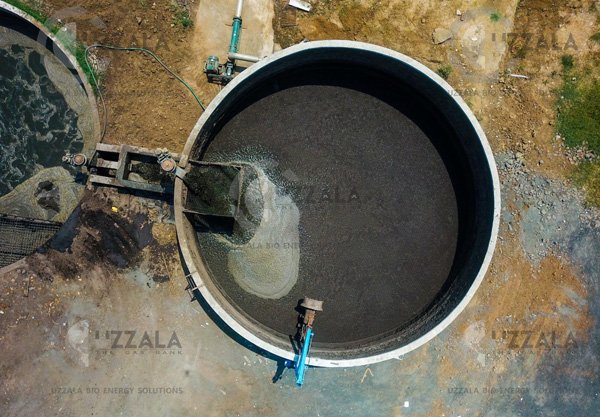
A sewage treatment plant (STP) processes domestic or municipal wastewater to remove suspended solids, organic matter, and other contaminants. Depending on the wastewater source and required treatment standard, the plant may include preliminary treatment, primary treatment, biological treatment, clarification, disinfection, and sludge management.
During wastewater treatment, organic solids and biological processes generate sludge. Some of this sludge can be treated through anaerobic digestion, where microorganisms break down biodegradable organic matter in the absence of oxygen. This process produces biogas, which generally contains methane and carbon dioxide, along with smaller amounts of other gases.
Integrating anaerobic digestion and biogas recovery can help a treatment facility make productive use of organic waste instead of relying exclusively on conventional sludge handling and disposal routes.
Biogas is produced through the anaerobic digestion of biodegradable organic materials under oxygen-free conditions. Potential feedstocks include sewage sludge, animal waste, and suitable organic fractions of municipal solid waste. The amount of biogas generated depends on the quantity and biodegradability of the feedstock, operating conditions, and digester performance.
Sewage sludge may contain proteins, sugars, lipids, detergents, phenolic compounds, and other organic substances. Its composition varies according to the wastewater source and treatment processes. Some sludge may also contain hazardous organic pollutants or other contaminants, so feedstock characterisation and appropriate handling are essential before digestion.
Anaerobic digestion is a biological process involving several groups of microorganisms that work together to convert organic matter into biogas and digestate. The stages are connected, and stable operation depends on maintaining suitable environmental and loading conditions.
Complex organic materials, including proteins, carbohydrates, and fats, are broken down into simpler soluble compounds. This makes the material more accessible to the microorganisms involved in subsequent digestion stages.
Acid-forming microorganisms convert soluble compounds into products such as organic acids, alcohols, hydrogen, and carbon dioxide. These products provide the substrates required by other microbial groups in the digestion process.
Intermediate compounds are converted into acetate, hydrogen, and carbon dioxide. These substances are important substrates for methane-producing microorganisms.
Methanogenic microorganisms produce methane from acetate and from hydrogen and carbon dioxide. The resulting biogas can be collected and sent for gas treatment, depending on the facility’s intended use for the recovered energy.
Temperature affects microbial activity and the rate of organic matter conversion. Anaerobic digestion systems commonly operate within defined temperature ranges, including mesophilic and thermophilic conditions. The appropriate range depends on the digester design, microbial community, feedstock, and operational strategy.
Maintaining a suitable pH is important for stable digestion. Excessive accumulation of volatile fatty acids can reduce pH and inhibit methane production. Monitoring pH, alkalinity, and related process indicators helps operators identify imbalance and adjust operating conditions.
The quantity of organic material fed into a digester and the time the material remains inside it influence digestion stability and biogas output. Retention time and loading should be selected based on sludge characteristics, reactor design, and the required treatment performance.
The balance of carbon and nitrogen in the feedstock can affect microbial growth and digestion performance. Where the sludge composition is unsuitable, controlled co-digestion or nutrient adjustment may be considered after assessing the feedstock and process requirements.
Biogas potential depends on the biodegradable organic fraction of the sludge. Detergents, toxic compounds, heavy metals, and other contaminants may affect digestion or restrict the use of the resulting digestate. Laboratory analysis is important when establishing the treatment approach.
A sewage treatment plant designed for resource recovery can combine wastewater treatment, sludge processing, anaerobic digestion, and biogas utilisation. The exact process arrangement depends on plant capacity, wastewater characteristics, local discharge standards, energy demand, and the quality of the recovered gas.
Incoming sewage passes through preliminary treatment to remove coarse solids, grit, and other materials that could interfere with downstream equipment. Further treatment stages are selected according to the wastewater characteristics and the required treated-water quality.
Sludge generated during wastewater treatment is collected and assessed for further processing. Depending on its characteristics, it may require thickening, blending, or other conditioning before entering an anaerobic digester.
The suitable sludge fraction is fed into an anaerobic digestion system. Microorganisms convert part of the biodegradable organic matter into biogas, while the remaining digestate requires appropriate treatment and handling.
The produced biogas is collected and conditioned for the intended use. Depending on its composition and application, treatment may include moisture removal, hydrogen sulphide reduction, carbon dioxide removal, and additional purification.
After suitable treatment, biogas may be used in compatible energy recovery equipment or considered for upgrading to biomethane. The most appropriate option depends on gas quality, energy demand, plant capacity, economics, and applicable regulations.
Biogas captures part of the energy contained in biodegradable organic matter. When used in suitable equipment, the recovered gas can help meet some of a wastewater treatment facility’s energy needs.
Energy generated from biogas can offset a portion of the electricity or fuel consumed on site. The actual contribution depends on the quantity and quality of the gas produced, energy conversion efficiency, and the facility’s operating demand.
Anaerobic digestion provides a controlled method for processing suitable organic sludge. It can reduce the biodegradable organic content of the material and change its volume and handling characteristics, although further sludge treatment may still be required.
Combining wastewater treatment with biogas recovery supports a circular approach in which organic waste becomes a potential energy resource. This can form part of a wider strategy to improve resource efficiency and reduce avoidable waste.
An energy-neutral plant aims to generate energy equivalent to its total energy consumption over a defined period. Achieving this goal requires both reducing energy use, including efficient aeration and pumping, and maximising practical energy recovery from sludge and other suitable organic waste.
Biogas output from sewage sludge cannot be estimated accurately from digester volume alone. It depends on the amount of sludge processed, its volatile solids content, biodegradability, organic loading rate, retention time, temperature, and the performance of the digestion system.
The supplied reference describes a potential annual production estimate for a digestion chamber with a volume of 500 m³. However, the stated figure requires verification of the original units and calculation basis before it is used for engineering or commercial purposes. A project-specific yield estimate should be developed using actual feedstock data and a validated process design.
Sewage sludge composition varies significantly between sites. Before designing an anaerobic digestion and biogas recovery system, assess sludge quantity, total and volatile solids, organic content, nutrient balance, contaminants, and seasonal variations. Gas production and energy recovery should be treated as design estimates until confirmed by suitable analysis and operating data.
The objective of an energy-efficient sewage treatment plant is to minimise the energy required for treatment while recovering as much usable energy as practical from wastewater sludge and suitable organic waste. This involves looking at the plant as a complete system rather than treating wastewater treatment and energy generation as separate operations.
Energy efficiency measures may include optimising aeration, selecting efficient pumps and motors, improving process control, reducing unnecessary recirculation, and evaluating anaerobic digestion where the feedstock is suitable. Biogas recovery can then be assessed alongside these measures to determine how much of the facility’s energy demand can be offset.
The final design must maintain the required wastewater treatment performance and comply with applicable discharge and environmental standards. Energy recovery should complement, not compromise, the safe treatment of sewage and sludge.
CBG Biotech Pvt. Ltd. supports wastewater treatment and biogas-related projects with a focus on practical process requirements and resource recovery opportunities. The right solution depends on site conditions, wastewater characteristics, sludge production, treatment targets, and energy demand.
Yes. Suitable sewage sludge contains biodegradable organic matter that can be converted into biogas through anaerobic digestion. The yield depends on sludge composition, operating conditions, and digester design.
Biogas typically contains methane and carbon dioxide, along with smaller amounts of hydrogen sulphide, water vapour, and other trace components. Actual composition depends on the feedstock and digestion conditions.
The main biological stages are hydrolysis, acidogenesis, acetogenesis, and methanogenesis. Together, these stages convert complex organic matter into simpler compounds and ultimately produce methane-rich biogas.
Some facilities may approach energy-neutral operation through a combination of energy-efficient treatment, optimised process control, and biogas recovery. Feasibility depends on the plant’s energy demand, sludge characteristics, biogas yield, and available recovery technology.
Important factors include biodegradable organic content, temperature, pH, nutrient balance, organic loading rate, retention time, and the presence of inhibitory contaminants.
Usually, the gas needs conditioning before use. The required treatment depends on its hydrogen sulphide, moisture, carbon dioxide, and other impurity levels, as well as the requirements of the selected energy or gas application.
Co-digestion may be possible with suitable organic waste streams. Compatibility, contamination risks, nutrient balance, and the effect on digester performance should be assessed before combining feedstocks.
Key inputs include daily wastewater flow, sludge quantity, total and volatile solids, sludge composition, existing treatment processes, energy consumption, site conditions, and the intended use of the recovered biogas.
Discuss your wastewater flow, sludge characteristics, treatment requirements, and energy recovery objectives with CBG Biotech Pvt. Ltd.
Phone: +91 9936544312 | +91 9211291016
Email: biotechcbgpvtltd@gmail.com
Contact CBG Biotech