
CBG Biotech Pvt. Ltd. provides biogas purification solutions for projects seeking to separate methane and carbon dioxide from raw biogas. Membrane biogas separation uses specialised polymer membranes that allow different gas components to permeate at different rates, helping produce a methane-rich gas stream.
Membrane technology is used in biogas upgrading because it offers a continuous separation process that can be configured for different flow rates and product gas requirements. Depending on the membrane technology, system design, feed gas composition, and operating conditions, biomethane with a methane content of approximately 96.5% to 99% may be achievable for suitable applications. Actual performance must be confirmed for the specific project.
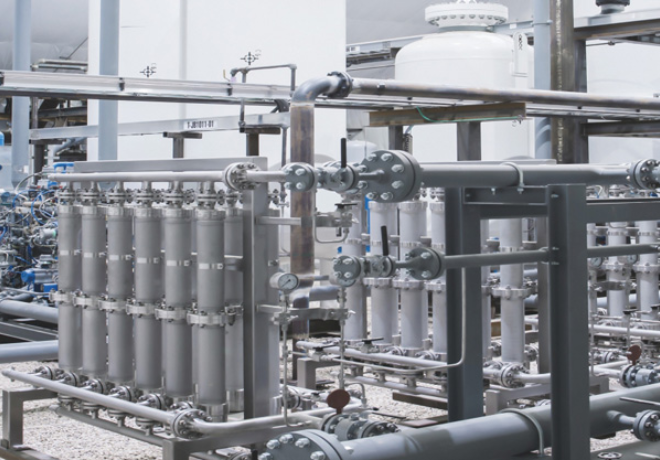
Membrane biogas separation is a gas upgrading technology used to reduce carbon dioxide in raw biogas and increase its relative methane concentration. The process uses selective polymer membranes that allow certain gas molecules to pass through the membrane more readily than others.
Raw biogas generally contains methane and carbon dioxide, along with water vapour and varying concentrations of other impurities. During membrane separation, the difference in permeation rates allows carbon dioxide to pass through the membrane more readily than methane in suitable membrane systems. The methane-rich gas is collected as the product stream, while the permeate contains a higher proportion of the separated components.
The complete plant may include gas pretreatment, compression, membrane modules, process controls, and additional separation stages. The arrangement depends on the raw biogas quality, required methane concentration, methane recovery target, and the intended end use.
The process uses selective permeation through a polymer membrane. When conditioned biogas is supplied at the required pressure, the gas components interact differently with the membrane material. Components that permeate more readily pass through the membrane faster, allowing the two gas streams to have different compositions.
Raw biogas is collected from the production plant and conditioned before it enters the membrane system. Pretreatment may include cooling, moisture removal, filtration, and dedicated hydrogen sulphide removal. These stages help protect the membranes from contamination and ensure that the feed gas is within the equipment manufacturer’s operating limits.
The conditioned biogas is supplied at the pressure required for separation. Pressure provides the driving force for gas permeation across the membrane. The operating pressure must be selected according to the membrane characteristics, flow rate, feed composition, and required product quality.
The pressurised gas enters the membrane modules. Carbon dioxide generally permeates through suitable biogas-upgrading membranes more readily than methane. This difference allows the system to separate a methane-rich product stream from a permeate stream containing a greater proportion of carbon dioxide and other faster-permeating components.
The retained gas stream contains a higher relative concentration of methane than the raw biogas. Depending on the plant design and operating conditions, additional membrane stages or gas recirculation may be used to meet the required methane concentration and recovery targets.
After separation, the product gas may require further drying, monitoring, compression, or other conditioning before it can be used. The exact requirements depend on the intended application and the relevant gas quality specifications.
Selective membrane separation can reduce carbon dioxide and produce a methane-rich gas stream. With a suitable membrane arrangement and operating conditions, methane concentrations in the range of approximately 96.5% to 99% may be achievable. The final specification depends on the project design and must be validated against the intended use.
Membrane systems can separate gas continuously as it flows through the modules. This makes the technology suitable for installations designed for ongoing biogas production, subject to the required operating and maintenance arrangements.
The number of membrane stages and the associated gas handling arrangement can be selected according to the incoming gas composition, required product purity, and methane recovery objectives. Engineering assessment helps establish the appropriate configuration.
Membrane modules can be assembled into modular systems. The overall footprint depends on the plant capacity, compression equipment, pretreatment units, number of separation stages, and access requirements for operation and maintenance.
Monitoring equipment and automated controls can track important parameters such as pressure, gas flow, and product composition. This information supports operational adjustments and helps operators assess the performance of the separation process.
Membrane technology can be considered for biogas upgrading projects where methane enrichment and carbon dioxide separation are required. Potential applications include:
The suitability of membrane separation depends on the inlet gas composition, gas flow rate, pressure, target methane content, methane recovery requirements, and the quality limits associated with the final application.
The methane and carbon dioxide concentrations in the incoming gas affect the separation requirements. Moisture, hydrogen sulphide, and other contaminants must also be assessed because they can influence pretreatment requirements and membrane performance.
Membrane materials differ in selectivity, permeability, operating limits, and resistance to contaminants. Selection should be based on the feed gas, operating pressure, desired methane purity, and methane recovery target.
Product purity and methane recovery are related but distinct performance measures. A design that targets a higher methane concentration may require additional separation stages or recirculation. The appropriate balance depends on the project’s technical and commercial objectives.
Effective pretreatment helps protect the membrane modules and supports reliable operation. Moisture, particles, oil aerosols, and hydrogen sulphide should be controlled according to the membrane supplier’s specifications.
The permeate stream contains separated components and may also contain some methane. System design should consider methane losses, permeate handling, potential recovery options, and applicable environmental and safety requirements.
The methane purity of 96.5% to 99% is an indicative range from the supplied process description, not a guarantee for every installation. Actual purity, methane recovery, energy consumption, and operating cost depend on the membrane type, feed gas, pretreatment, pressure, and separation configuration. Project-specific performance should be confirmed during technical evaluation.
In a CBG production plant, membrane separation can be used to upgrade raw biogas by reducing carbon dioxide and increasing the methane concentration. The methane-rich product stream can then be assessed for additional drying, quality monitoring, compression, and other conditioning needed for the intended application.
The full treatment process should be designed around the applicable product gas specification. Depending on the raw biogas, dedicated H₂S removal, moisture control, filtration, and other treatment stages may be necessary before or after membrane separation. The design should also consider methane recovery, permeate handling, and safe operation of the gas compression and treatment equipment.
CBG Biotech Pvt. Ltd. supports biogas and renewable energy projects requiring gas treatment and purification solutions. Selecting a suitable membrane arrangement involves understanding the feed gas, required product quality, plant capacity, pretreatment requirements, and downstream use.
Membrane biogas separation is a gas upgrading process that uses selective polymer membranes to separate carbon dioxide from methane based on differences in their permeation rates through the membrane material.
When biogas passes through a suitable membrane under pressure, carbon dioxide generally permeates more readily than methane. This creates a methane-rich retained stream and a permeate stream with a higher proportion of carbon dioxide.
The supplied process description gives an indicative methane concentration range of 96.5% to 99%. Actual purity depends on membrane selection, inlet gas composition, operating conditions, and the number of separation stages.
Yes, raw biogas commonly requires conditioning before entering membrane modules. Moisture, hydrogen sulphide, particles, and other contaminants should be controlled according to the membrane system’s operating specifications.
Yes. Membrane separation is used in biogas upgrading projects to increase methane concentration. Additional conditioning and compression may be required to meet the final CBG specification.
Membrane performance for hydrogen sulphide depends on the membrane material and system configuration. Dedicated H₂S removal is commonly evaluated as part of pretreatment to protect equipment and achieve the required outlet gas quality.
Important factors include feed gas composition, pressure, temperature, membrane characteristics, pretreatment quality, flow rate, and the target balance between methane purity and recovery.
Key inputs include raw biogas flow rate, methane and carbon dioxide concentrations, H₂S and moisture levels, operating conditions, target methane purity, methane recovery requirements, and the intended use of the treated gas.
Contact CBG Biotech Pvt. Ltd. to discuss your biogas flow rate, inlet composition, target methane purity, and project requirements.
Phone: +91 9936544312 | +91 9211291016
Email: biotechcbgpvtltd@gmail.com
Contact CBG Biotech