
CBG Biotech Pvt. Ltd. provides hydrogen sulphide (H₂S) removal solutions designed to reduce sulphur compounds in biogas and support downstream gas purification and utilisation. Our biological desulphurisation approach combines gas scrubbing with a biological regeneration process, helping regenerate the scrubbing solution and recover elemental sulphur as a by-product.
Hydrogen sulphide removal is an important step in biogas treatment because H₂S can cause corrosion, create odour concerns, and affect equipment operating conditions. An appropriately designed removal system helps improve gas quality and supports reliable operation of biogas and compressed biogas facilities.
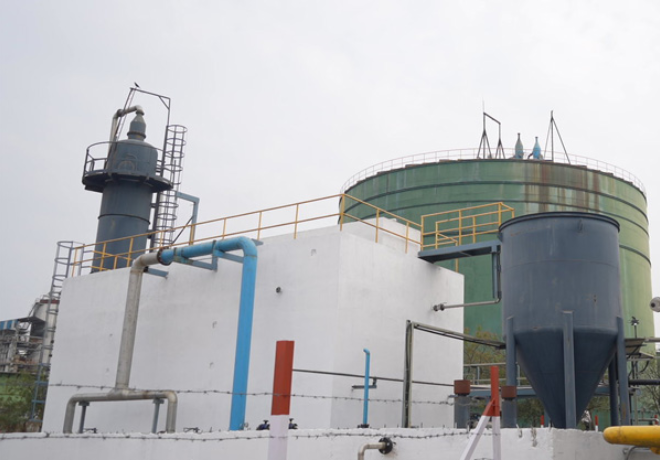
An H₂S removal system, also known as a biogas desulphurisation system, is used to reduce hydrogen sulphide from raw biogas before the gas is supplied to sensitive equipment or further purification stages. Hydrogen sulphide is a sulphur-containing compound commonly present in biogas produced through the anaerobic digestion of organic materials.
The biological scrubbing system described here uses a scrubbing liquid to absorb hydrogen sulphide from the gas. The sulphide-containing liquid is then sent to a bioreactor, where selected aerobic microorganisms oxidise the absorbed sulphide into elemental biosulphur. This biological step helps regenerate the scrubbing solution for reuse in the process.
The system works through the combined action of gas scrubbing and biological regeneration. The gas contacts a circulating liquid in the scrubber, allowing hydrogen sulphide to transfer from the gas phase into the liquid phase. The sulphide-rich liquid is then directed to a bioreactor, where microorganisms convert the sulphide into elemental sulphur under controlled aerobic conditions.
Raw biogas enters the scrubbing stage and comes into contact with the circulating liquid. The liquid absorbs hydrogen sulphide from the gas. The treated gas exits the scrubber with a reduced H₂S concentration, depending on the system design, operating conditions, and incoming gas composition.
The scrubbing liquid containing absorbed sulphide is directed to a biological reactor. Aerobic microorganisms from the group of colourless sulphur bacteria oxidise the sulphide and produce elemental biosulphur. This step supports regeneration of the alkaline scrubbing solution so that it can be circulated back to the scrubber.
During the biological step, the hydroxide used in the scrubbing process is regenerated through the overall process chemistry. The regenerated liquid is returned to the scrubber, where it can absorb hydrogen sulphide from incoming biogas again. This recirculation approach reduces the need for continuous replacement of the scrubbing solution.
CBG Biotech’s supplied process concept includes nutrient feed for the microorganisms involved in sulphide conversion. Appropriate nutrient supply and operating control help maintain biological activity and support the separation of elemental sulphur from hydrogen sulphide. Actual nutrient requirements depend on the feed gas, process design, and operating conditions.
One advantage of biological biogas desulphurisation is the recovery of elemental sulphur during the sulphide oxidation process. Rather than treating absorbed sulphide only as a waste stream, the system can recover it as biosulphur, subject to the process conditions and the quality of the recovered material.
Elemental sulphur has applications in several industries. Depending on its purity, physical properties, applicable regulations, and buyer specifications, recovered sulphur may be considered for certain agricultural or industrial uses.
The supplied process information indicates a biosulphur purity range of approximately 80% to 90%, with higher purity potentially achievable through additional processing. These figures should be treated as indicative and verified through product testing. Suitability for any specific application depends on the final composition and applicable safety and regulatory requirements.
Reducing hydrogen sulphide can help limit sulphur-related corrosion risks in gas-handling equipment and downstream systems. The required outlet concentration depends on the specifications of the equipment and the intended use of the treated gas.
H₂S removal helps improve the quality of biogas before it is used in boilers, engines, gas upgrading systems, or other applications. Additional treatment may still be required to meet the moisture, carbon dioxide, oxygen, siloxane, or other specifications relevant to the final application.
The biological regeneration stage enables the scrubbing liquid to be reused in the process. This can help improve resource efficiency compared with systems that rely on frequent replacement of the scrubbing medium.
Elemental biosulphur recovery can create an additional material stream for evaluation. Its commercial value depends on recovered quantity, purity, handling costs, and the requirements of potential end users.
Hydrogen sulphide removal can be relevant to a range of biogas and renewable gas projects, including:
Final equipment selection should be based on the gas flow rate, inlet H₂S concentration, required outlet specification, operating pressure, gas composition, and site-specific operating conditions.
CBG Biotech Pvt. Ltd. works in the biogas and renewable energy sector, supporting projects that require practical gas-treatment and purification solutions. The appropriate H₂S removal configuration depends on project capacity, raw biogas quality, the required treated-gas specification, and the intended downstream application.
Removal efficiency, chemical consumption, nutrient demand, sulphur recovery, and wastewater characteristics depend on inlet gas composition, flow rate, temperature, pressure, and operating conditions. Project-specific sizing and performance guarantees should be confirmed during the technical evaluation stage.
An H₂S removal system reduces hydrogen sulphide in raw biogas to help protect downstream equipment, improve gas quality, and meet the requirements of the intended gas application.
The scrubbing liquid absorbs hydrogen sulphide from biogas. The sulphide-containing liquid then enters a bioreactor, where aerobic microorganisms oxidise the sulphide into elemental biosulphur and support regeneration of the scrubbing solution.
The supplied process description states that removal efficiencies above 99% can be achieved. The actual result depends on inlet gas quality, equipment design, and operating conditions, and should be confirmed for each project.
The bioreactor provides an environment for aerobic microorganisms to oxidise absorbed sulphide into elemental biosulphur and help regenerate the scrubbing liquid for recirculation.
Yes, elemental biosulphur can be produced as a by-product. The purity and potential use of the recovered material depend on process conditions and laboratory testing.
H₂S removal is commonly considered as part of biogas treatment before upgrading or utilisation. The correct configuration depends on the raw gas composition and the quality specifications required by the downstream system.
Key inputs include the biogas flow rate, inlet hydrogen sulphide concentration, required outlet concentration, gas composition, operating pressure, temperature, and intended gas application.
Discuss your biogas flow rate, inlet H₂S concentration, and required outlet gas quality with CBG Biotech Pvt. Ltd. Our team can help you evaluate the relevant requirements for your project.
Phone: +91 9936544312 | +91 9211291016
Email: biotechcbgpvtltd@gmail.com
Contact CBG Biotech